Gardening 101
Monday, April 5
5:30 – 7:00 pm
members $10, non-members $12
Visitor Center, Classroom 2
Amanda Tedrow, ACC Cooperative Extension, UGA
New to gardening or Georgia? This quick start class will teach participants the basics of home gardening. The class will touch on the topics of testing and preparing the soil, sunlight and water requirements, planting tips and yearly maintenance. Amanda will provide basic zoning information to help participants plant and maintain annuals, perennials, shrubs, and trees in their yard.
Spring Plant Sale!!!
Saturday, April 10
8:00 am - 2:00 pm
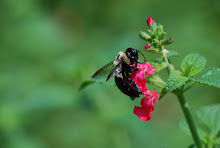
Beekeeping for Beginners: Units 4-6
Unit 5: Installing Bees/Spring Buildup
Friday, April 9 or Saturday, April 10
1:00 - 3:00 pm members $40; non-members $45
meet at Shade Garden Arbor
Dan Harris, Beekeeper
Have you ever wanted to harvest honey from your own beehive? Would you like to collect beeswax to make candles or soap? Do you have a touch of ‘backyard biologist’ in your blood? If so, these workshops, covering the fundamentals of beekeeping, may be for you. Weather alternative dates will be scheduled if necessary. Completion of the Unit 1 – 3 is not required to attend. However, a protective veil and gloves are required for Unit 4 and 5. In Unit 5, Dan will demonstrate how to install a package of bees into a new hive. He will also open an existing hive and compare it to the previous inspection from Unit 4.
Basic Botany
(a Certificate in Native Plants Core Course)
Saturday, April 10
8:30 am – 4:30 pm
members $90, non-members $100
Visitor Center, Classroom 2
Robert Wyatt, Adjunct Professor of Ecology, University of Georgia
Basic Botany provides an introduction to general plant anatomy, morphology, and physiology, with an emphasis on relating form to function. Using live material and slides, students will make detailed observations of root, stem, and leaf tissues and discuss the processes of water and nutrient movements. The mechanisms of flower pollination, seed dispersal, and germination will be explored, along with the basics of plant genetics, photosynthesis, and evolution.
Spring Wildflower Ramble
Saturday, April 10
10: 00 am
Free
meet at Shade Garden arbor
Heather Alley, Conservation Biologist, SBG
It’s springtime at the Garden! Enjoy a promenade around the Native Flora Garden and discover the many interesting wildflowers blooming this time of year.
Spring Wildflowers of the Granite Rock Outcrops of Georgia
(a Certificate in Native Plants Elective Course)
Saturday, April 17
8:30 am – 12:30 pm
members $40; non-members $45
Visitor Center, Classroom 2
Linda Chafin, Conservation Botanist, State Botanical Garden of Georgia
Students will be introduced to the ecology of Piedmont granite outcrops and their flora in the classroom, then visit Rock and Shoals Natural Area to learn to identify the species that characterize Georgia’s granite rock outcrops and surrounding plant communities.
Botanical Garden Scavenger Hunt
Saturday, April 17
10:00 -12:00 noonmembers $8; non-members $10 (per team)
Meet in front of Visitor Center
SBG Education Staff
What better way to get to know the Garden than to become an explorer! Throughout history and even today, explorers have traveled the globe in search of plants that could be used for food, medicine, shelter, and much more. In the process, they often moved plants from their original location to the one where they are found now. Did you know our own Georgia peach originally came from China? Each team (no more than five) will work together to complete a list of Garden explorations, finding plants and forests treasures and documenting their uses and native regions. Teams must stay together during the hunt. Prizes will be awarded to the first five teams to finish. This program is designed for families but others are welcome as well.
Vegetable Papermaking
Monday, April 19
9:30 am – 12:00
noonmembers $24; non-members $27
Visitor Center, Classroom 2
Cindy Bowden, Director of the Robert C. Williams Paper Museum
Join the Robert C. Williams Paper Museum and the Georgia Museum of Art for a morning of papermaking and fun. We will be making paper from abaca (banana leaf fiber), recycled cotton and linen rags, daylily fibers, and leeks. Wear washable clothing, tour the garden to identify potential fiber sources for papermaking and make your own sheets. Fee includes materials. Class is designed for adults and limited to 25 participants.
Friday, April 2, 2010

Wednesday, March 3, 2010
The State Botanical Garden - Frequently Asked Questions
Where is the State Botanical Garden located?
Off South Milledge Avenue about 3 miles from the central UGA campus in Athens.
When was the State Botanical Garden established? 1968
The Garden was enacted by Senate Resolution 277 in 1984 to be designated ‘The State Botanical Garden of Georgia’, where the General Assembly of Georgia stated “it is only fitting and proper that we recognize the achievement and beauty represented by the garden; and it is only appropriate, therefore, that the significance of this institution to the State of Georgia and to all Georgians be recognized.”
Does the State Botanical Garden “own” its facilities and property?
No, all University property is owned by the State of Georgia under the auspices of the Board of Regents.
How is the State Botanical Garden administered?
The State Botanical Garden is a unit of the University of Georgia. The Director reports to the Vice President for Public Service & Outreach who in turn reports to the University Provost.
What is the current level of annual University funding for the State Botanical Garden? $875,688
Does the State Botanical Garden receive direct appropriations from the state legislature? No.
How much of the State Botanical Garden’s annual budget is provided by the University/State?
About 60% - 70%.
Where does the balance of the operating budget come from? From gifts, grants, donations, and earned income from building rentals, gift shop sales and café commissions.
Has the State Botanical Garden been successful in attracting private support?
Yes, all major gardens and buildings have been built principally with private funding.
Does the University of Georgia serve as a home for other state museums?
Yes, the Georgia Museum of Art and the Georgia Museum of Natural History.
Was closure of these museums included in the UGA budget reduction plan? No.
How many people does the State Botanical Garden serve annually? Approximately 250,000.
How does the Garden compare to other University affiliated botanical gardens?
While there is no official ranking system, the State Botanical Garden is generally considered to be in the top 10 in the U.S. with facilities virtually unequaled at other University botanical gardens.
How does the State Botanical Garden contribute to the University of Georgia and the State of Georgia?
The Garden serves as an important tourist destination, bringing revenue to the Athens area.
- Voted by Athens Banner-Herald readership as Athens’ Best Attraction for the past five years.
- Annual visitorship of over 250,000, second only to Stanford Stadium in Athens Clarke-County.
- 26,000 attend adult and children educational programs, family festivals and special events
from 133 of Georgia’s 159 counties.
- Over $30 million investment in private gifts.
- Over 1,500 Friends of the Garden members
- Four major buildings, including two with architectural award-winning designs.
- Headquarters of the Garden Club of Georgia, Inc. with over 15,000 members statewide.
- Over 250 weddings and meetings held annually in Garden facilities.
- Over ½ mile of Middle Oconee River frontage, 25 acres of protected wetlands, 5 miles of nature trails, and upland deciduous forest adds to Athens’ green space.
- Art gallery in Visitor Center displays regional art in rotating art exhibits.
- Garden gift shop offers crafts and artwork from local artists and books by local authors.
- Free lectures and concerts provide outreach to Athens community and a venue for local artists and horticulture experts.
- Volunteer programs provide gardening skills, social opportunities and support for the Garden.
The State Botanical Garden of Georgia is a living museum housing International botanical collections.
- The finest native flora collections in the state, many of which are rare, threatened and endangered, including a safeguarded collection of eastern hemlock and two safeguarded populations of the world’s most critically endangered conifer—Florida torreya.
- Plant collections of socio-economic and historic importance to Georgia, used to educate all students, including UGA undergraduates.
- Research collections monitored by UGA professors, graduate and undergraduate students.
- Garden displays tied to professional organizations, including All-America Selections, Southeastern Conifer Society Reference Garden, American Daffodil Society Display Garden with an emphasis on heritage and heirloom cultivars.
- Both mountain and coastal plain bogs display Sarracenia species (pitcherplants) that are the most critically endangered of our state wildflowers.
- Most recent garden exhibits collections of flowering plants to inspire and educate homeowners and students.
The Garden serves as a center for internationally recognized environmental education.
- University of Georgia students utilize the Garden for numerous field laboratory classes: entomology, plant taxonomy, horticulture, science education, art, broadcast news, service-learning projects, ecology, forestry, etc. UGA interns in horticulture, education, publicity, event planning and more are trained with the Garden staff as mentors.
- Teachers from throughout the state participate in the Endangered Plant Stewardship Network, where Georgia teachers earn required CEUs and qualify to receive a permit through the Georgia Department of Natural Resources to keep threatened and endangered species on their school site providing environmental education to elementary school students.
- Provide statewide professional development and on-going support to educators with grant funded environmental education / service learning program, Garden Earth Naturalists.
- Conduct on-going programming for students and families including standards-based school field trips, summer environmental education camps and family festivals.
- Award-winning education program chosen to develop after school programs nationwide.
- Coordinate and provide facilities for Athens Area Master Gardeners training and monthly meetings.
- Partnering with the Maquipacuna Foundation to create Our Shared Forests, a sustaining organization that supports Ecuadorian farmers while teaching children on two continents about the similarities and interdependence of each habitat.
The Garden is a major influence in conservation globally and throughout the state of Georgia.
- Headquarters and creators of the internationally recognized Georgia Plant Conservation Alliance, the most active plant conservation network in the state, now used as a model for similar programs in North Carolina, Texas and Alabama.
- Since its inception 17 years ago, the Plant Conservation and Research Program has received more than $1.4 million in grants and gifts to support its mission.
- Sponsor for graduate student MS and PhD degrees completed by UGA students in the departments of Horticulture and the Odum School of Ecology.
- Native plants are propagated and grown for federal and state restoration and endangered plant safeguarding projects, in cooperation with the Georgia DNR, US Fish and Wildlife, and the US Forest Service.
- An invited member of the Center for Plant Conservation, a national network of 36 of America’s leading botanical institutions dedicated to preventing the extinction of imperiled native flora.
- Headquarters of Botanical Guardians, a statewide volunteer (over 100 participants) network monitoring at-risk plant populations.
- Funded by multiple grants from the Stanley Smith Horticultural Trust to work with gardens in Argentina and Costa Rica to develop horticultural programs featuring native plants.
- The Botanical Garden (with Whitehall Forest) is an Important Bird Area (IBA) designated by the Audubon Society in 2008.
- Certificate in Native Plant Program has 29 graduates and 120 participants who develop and volunteer for conservation projects in their communities.
- Member of Botanic Garden Conservation International, American Public Garden Association, Georgia Green Industry Association, Georgia Environmental Education Alliance, American Conifer Society, American Daffodil Society, American Camellia Society, American Nursery Association.
Private fundraising has resulted in $30 million in the creation and growth of the Garden in 41 years.
- State revenues through UGA fund positions; revenues from private donations, rentals, educational programs, grants and facility rentals compose 30-40% of the Gardens operating budget and practically all construction of gardens and facilities.
- $3 million Horticulture Complex under construction scheduled for Summer 2010 completion.
Off South Milledge Avenue about 3 miles from the central UGA campus in Athens.
When was the State Botanical Garden established? 1968
The Garden was enacted by Senate Resolution 277 in 1984 to be designated ‘The State Botanical Garden of Georgia’, where the General Assembly of Georgia stated “it is only fitting and proper that we recognize the achievement and beauty represented by the garden; and it is only appropriate, therefore, that the significance of this institution to the State of Georgia and to all Georgians be recognized.”
Does the State Botanical Garden “own” its facilities and property?
No, all University property is owned by the State of Georgia under the auspices of the Board of Regents.
How is the State Botanical Garden administered?
The State Botanical Garden is a unit of the University of Georgia. The Director reports to the Vice President for Public Service & Outreach who in turn reports to the University Provost.
What is the current level of annual University funding for the State Botanical Garden? $875,688
Does the State Botanical Garden receive direct appropriations from the state legislature? No.
How much of the State Botanical Garden’s annual budget is provided by the University/State?
About 60% - 70%.
Where does the balance of the operating budget come from? From gifts, grants, donations, and earned income from building rentals, gift shop sales and café commissions.
Has the State Botanical Garden been successful in attracting private support?
Yes, all major gardens and buildings have been built principally with private funding.
Does the University of Georgia serve as a home for other state museums?
Yes, the Georgia Museum of Art and the Georgia Museum of Natural History.
Was closure of these museums included in the UGA budget reduction plan? No.
How many people does the State Botanical Garden serve annually? Approximately 250,000.
How does the Garden compare to other University affiliated botanical gardens?
While there is no official ranking system, the State Botanical Garden is generally considered to be in the top 10 in the U.S. with facilities virtually unequaled at other University botanical gardens.
How does the State Botanical Garden contribute to the University of Georgia and the State of Georgia?
The Garden serves as an important tourist destination, bringing revenue to the Athens area.
- Voted by Athens Banner-Herald readership as Athens’ Best Attraction for the past five years.
- Annual visitorship of over 250,000, second only to Stanford Stadium in Athens Clarke-County.
- 26,000 attend adult and children educational programs, family festivals and special events
from 133 of Georgia’s 159 counties.
- Over $30 million investment in private gifts.
- Over 1,500 Friends of the Garden members
- Four major buildings, including two with architectural award-winning designs.
- Headquarters of the Garden Club of Georgia, Inc. with over 15,000 members statewide.
- Over 250 weddings and meetings held annually in Garden facilities.
- Over ½ mile of Middle Oconee River frontage, 25 acres of protected wetlands, 5 miles of nature trails, and upland deciduous forest adds to Athens’ green space.
- Art gallery in Visitor Center displays regional art in rotating art exhibits.
- Garden gift shop offers crafts and artwork from local artists and books by local authors.
- Free lectures and concerts provide outreach to Athens community and a venue for local artists and horticulture experts.
- Volunteer programs provide gardening skills, social opportunities and support for the Garden.
The State Botanical Garden of Georgia is a living museum housing International botanical collections.
- The finest native flora collections in the state, many of which are rare, threatened and endangered, including a safeguarded collection of eastern hemlock and two safeguarded populations of the world’s most critically endangered conifer—Florida torreya.
- Plant collections of socio-economic and historic importance to Georgia, used to educate all students, including UGA undergraduates.
- Research collections monitored by UGA professors, graduate and undergraduate students.
- Garden displays tied to professional organizations, including All-America Selections, Southeastern Conifer Society Reference Garden, American Daffodil Society Display Garden with an emphasis on heritage and heirloom cultivars.
- Both mountain and coastal plain bogs display Sarracenia species (pitcherplants) that are the most critically endangered of our state wildflowers.
- Most recent garden exhibits collections of flowering plants to inspire and educate homeowners and students.
The Garden serves as a center for internationally recognized environmental education.
- University of Georgia students utilize the Garden for numerous field laboratory classes: entomology, plant taxonomy, horticulture, science education, art, broadcast news, service-learning projects, ecology, forestry, etc. UGA interns in horticulture, education, publicity, event planning and more are trained with the Garden staff as mentors.
- Teachers from throughout the state participate in the Endangered Plant Stewardship Network, where Georgia teachers earn required CEUs and qualify to receive a permit through the Georgia Department of Natural Resources to keep threatened and endangered species on their school site providing environmental education to elementary school students.
- Provide statewide professional development and on-going support to educators with grant funded environmental education / service learning program, Garden Earth Naturalists.
- Conduct on-going programming for students and families including standards-based school field trips, summer environmental education camps and family festivals.
- Award-winning education program chosen to develop after school programs nationwide.
- Coordinate and provide facilities for Athens Area Master Gardeners training and monthly meetings.
- Partnering with the Maquipacuna Foundation to create Our Shared Forests, a sustaining organization that supports Ecuadorian farmers while teaching children on two continents about the similarities and interdependence of each habitat.
The Garden is a major influence in conservation globally and throughout the state of Georgia.
- Headquarters and creators of the internationally recognized Georgia Plant Conservation Alliance, the most active plant conservation network in the state, now used as a model for similar programs in North Carolina, Texas and Alabama.
- Since its inception 17 years ago, the Plant Conservation and Research Program has received more than $1.4 million in grants and gifts to support its mission.
- Sponsor for graduate student MS and PhD degrees completed by UGA students in the departments of Horticulture and the Odum School of Ecology.
- Native plants are propagated and grown for federal and state restoration and endangered plant safeguarding projects, in cooperation with the Georgia DNR, US Fish and Wildlife, and the US Forest Service.
- An invited member of the Center for Plant Conservation, a national network of 36 of America’s leading botanical institutions dedicated to preventing the extinction of imperiled native flora.
- Headquarters of Botanical Guardians, a statewide volunteer (over 100 participants) network monitoring at-risk plant populations.
- Funded by multiple grants from the Stanley Smith Horticultural Trust to work with gardens in Argentina and Costa Rica to develop horticultural programs featuring native plants.
- The Botanical Garden (with Whitehall Forest) is an Important Bird Area (IBA) designated by the Audubon Society in 2008.
- Certificate in Native Plant Program has 29 graduates and 120 participants who develop and volunteer for conservation projects in their communities.
- Member of Botanic Garden Conservation International, American Public Garden Association, Georgia Green Industry Association, Georgia Environmental Education Alliance, American Conifer Society, American Daffodil Society, American Camellia Society, American Nursery Association.
Private fundraising has resulted in $30 million in the creation and growth of the Garden in 41 years.
- State revenues through UGA fund positions; revenues from private donations, rentals, educational programs, grants and facility rentals compose 30-40% of the Gardens operating budget and practically all construction of gardens and facilities.
- $3 million Horticulture Complex under construction scheduled for Summer 2010 completion.
Wednesday, February 10, 2010
Zumba for Great Cause
You've heard about Zumba! You've been wanting to try it!
Now's the perfect time to have fun, get in shape, enjoy the Garden and help others!
Dancing Dawgs for Haiti - UGA Haitian Relief Effort 2010
Wednesday, February 17, 2010
5:30pm - 8:00pm
State Botanical Garden of Georgia - Conservatory
2450 South Milledge Avenue, Athens, GA
Join several Athens Zumba instructors for an evening of fun, sweat and dance while raising funds for Dawgs for Haiti! Come for an hour, just stop by, or stay the whole time! Just make sure to enjoy yourself! Proceeds will be split between Doctors Without Borders and the American Red Cross, two organizations that are working directly with the Haitian relief effort.
Never done Zumba before? No worries! There will be several instructors scattered throughout the floor to provide different levels of workout intensity from low-impact (for new Zumba-goers or those with an injury) to high-impact (experienced dancers and those who just love to get crazy!). It's all about having fun while getting a great workout.In addition to Zumba there will also be a belly dancing session, door prizes, and refreshments!
The conservatory, for those who have never been to the Gardens, is the big open room in the Visitor Center, next to the gift shop and above the cafe, with trees and plants EVERYWHERE! It's a wonderful place to dance with a great view!
$5 *suggested* donation (but more is welcome and anything is appreciated!)
Dawgs for Haiti will be selling t-shirts for $10.
For more information, please contact Cora Keber at 706-542-6156 or ckeber@uga.edu
Now's the perfect time to have fun, get in shape, enjoy the Garden and help others!
Dancing Dawgs for Haiti - UGA Haitian Relief Effort 2010
Wednesday, February 17, 2010
5:30pm - 8:00pm
State Botanical Garden of Georgia - Conservatory
2450 South Milledge Avenue, Athens, GA
Join several Athens Zumba instructors for an evening of fun, sweat and dance while raising funds for Dawgs for Haiti! Come for an hour, just stop by, or stay the whole time! Just make sure to enjoy yourself! Proceeds will be split between Doctors Without Borders and the American Red Cross, two organizations that are working directly with the Haitian relief effort.
Never done Zumba before? No worries! There will be several instructors scattered throughout the floor to provide different levels of workout intensity from low-impact (for new Zumba-goers or those with an injury) to high-impact (experienced dancers and those who just love to get crazy!). It's all about having fun while getting a great workout.In addition to Zumba there will also be a belly dancing session, door prizes, and refreshments!
The conservatory, for those who have never been to the Gardens, is the big open room in the Visitor Center, next to the gift shop and above the cafe, with trees and plants EVERYWHERE! It's a wonderful place to dance with a great view!
$5 *suggested* donation (but more is welcome and anything is appreciated!)
Dawgs for Haiti will be selling t-shirts for $10.
For more information, please contact Cora Keber at 706-542-6156 or ckeber@uga.edu
Wednesday, February 3, 2010
The Southern Garden Heritage Conference - February 19
There is still time to register for the Southern Garden Heritage Conference, a wonderful combination of gardening and history. This informative all-day conference includes lunch and provides seven contact hours for Georgia landscape architects.
2010 Southern Garden Heritage Conference
The State Botanical Garden of Georgia, 2450 South Milledge Avenue, Athens, Georgia 30605
Call 706-542-6156 or register online at www.uga.edu/botgarden.
Friday, February 19 Callaway Building Auditorium
9:00 am – 4:00 pm members $95; non-members $110
The State Botanical Garden of Georgia is pleased to host the Southern Garden Heritage Conference, which brings an audience from throughout the Southeast. Robin Salmon will open the conference with a lecture about garden sculpture and close the conference with a presentation about Brookgreen Gardens, one of America's finest sculpture gardens. Sue Burgess will provide a brief history of efforts to save the historic Root House in Marietta and create a garden of the period. Keyes Williamson will provide an update on work being done to preserve the Elizabeth Lawrence Garden in Charlotte. John Waters and Jim Cothran will provide a look into the architecture and gardens of Savannah and their interrelationships. And Gerard Krewer will speak about some of Georgia's rare and unusual fruits-some familiar and some unfamiliar. Amateurs and professionals alike are sure to find this conference interesting and informative.
AGENDA
9:00 - 9:15 Opening Remarks - Dr. Jeff Lewis
9:15 - 10:00 A Brief History of American Garden Sculpture - Robin Salmon,
Information about the origins of garden sculpture in America, and examples of important works in that field from the 19th Century to the present will be discussed.
10:00 - 10:30 Break
10:30 -11:15 The Root House, A Mid-Nineteenth Century Middle Class Merchant’s Home: Challenges of Recreating the Historic Southern Landscape in a Hostile 21st Century Urban Environment - Sue Burgess
The Root House Garden is designed to reflect the gardening practices of the mid-19th century. The Root’s garden in the 19th century would have contained plants that were ornamental, medicinal, or edible, or a combination of types. The garden is planted with vegetables, culinary herbs, medicinal herbs, fruit trees, decorative flowers and flowering shrubs. All the plants have been researched for their availability in Georgia at the time the Root House was built.
11:15 - 12:00 The Elizabeth Lawrence Garden - Keyes Williamson
Elizabeth Lawrence had already established herself as a preeminent garden writer when, in 1949, she moved to Charlotte, North Carolina. Over the next three decades, Lawrence cultivated an overflowing garden within the confines of a typical, modest residential lot measuring 70’ by 225’. Lawrence used her garden as a horticultural laboratory, where she cultivated a wide range of plants with an eye towards their usefulness in the Southern Garden. This presentation will examine Lawrence’s contribution to gardening in the region using the garden as a vehicle to explore her life and writing.
12:00 - 1:00 Lunch
1:00 - 1:45 The Architecture and Gardens of Savannah - John Waters & Jim Cothran
Established in 1733, Savannah was America’s first planned city. Noted for its fine architecture, parks, and gardens, Savannah retains its romantic character and attracts thousands of tourists each year to experience its picturesque charm. The presentation will focus on some of Savannah’s finest historic buildings, notable parks, and ornamental gardens.1:45 - 2:30 Rare and Unusual Fruits of Georgia - Gerard KrewerLearn about the fascinating history of the rare and unusual fruits of Georgia from the nearly semi-tropical coastal islands to the Blue Ridge mountains.
2:30 - 3:00 Break
3:00 - 3:45 Brookgreen Gardens Past and Present - Robin Salmon
An overview of the significance of the land known as Brookgreen Gardens including its historic landscape, its role as the first public sculpture garden in America, the history of its founders Archer and Anna Huntington, and highlights of its collections through the years.
3:45 - 4:00 Closing Remarks
Thursday, January 7, 2010
Larger-than-life Blooms Come to Life on Silk at The State Botanical Garden of Georgia
Jamie Kirkell, Silk Artist
Art Exhibit: January 16 – February 28, 2010
Exhibit Opening: Sunday, January 17 2:00-4:00 pm with a Gallery Talk at 3:00 pm
Art Exhibit: January 16 – February 28, 2010
Exhibit Opening: Sunday, January 17 2:00-4:00 pm with a Gallery Talk at 3:00 pm
The Alice Hand Callaway Visitor Center & Conservatory
The State Botanical Garden of Georgia
2450 S. Milledge Avenue, Athens
706-542-1244 www.uga.edu/botgarden
The State Botanical Garden of Georgia
2450 S. Milledge Avenue, Athens
706-542-1244 www.uga.edu/botgarden

Flowers will fill the lobby of the State Botanical Garden of Georgia’s Visitor’s Center & Conservatory this winter. Traditional silk painting methods and modern design combine to create vivid, larger-than-life blooms that are at the same time delicate and bold.
This vibrant, beautiful exhibit will be on display from January 16 – February 28, 2010. Works by silk artist Jamie Kirkell, who trained in Java under Indonesian Master of Batik Bambang Oetoro, are part of permanent collections on display in many resorts and businesses and exhibited in galleries and botanical gardens throughout the country. Kirkell has lectured or taught at the Museum of Natural History in New York, Israel Museum in Jerusalem, Taos Art Center, the Northeast United States Craft Expo in Reinbeck, NY, Leu Gardens and Brooklyn Botanic Garden. He has 25 years of experience as an artist, including 10 years as a studio art director in New York City. Kirkell will discuss his work, the history of batik and more in a free gallery talk at 3:00 on Sunday, January 17th. Meet the artist and view the many works on display at the art reception from 2:00-4:00 p.m. Visit his website at www.KirkellSilkStudios .com.
You’ll want to own one of the large, bold originals that sell for thousands of dollars, but there will also be gallery wrap pieces that can be purchased for under $100. New in Kirkell’s exhibit are exquisite silk scarves that can decorate a wall or be the focal point of an outfit. Stationery featuring Kirkell’s paintings will be available in the Garden Gift Shop.
Make plans to warm up a winter afternoon with tropical flowers in a tropical conservatory, learning more about an art form of the tropics – at The State Botanical Garden of Georgia.
Wednesday, January 6, 2010
ZUMBA! in a Tropical Conservatory - Every Wednesday
ZUMBA!
Who is ready to shake those holiday calories away?
We have decided to offer Zumba as an ongoing class throughout the year.
We will have class every Wednesday, 5:30-6:30. We will be using a punch card system to track the classes. Participants will pay for 9 classes and get one class free (members $54/non-members $72). There will be no expiration for the punch card. There is plenty of room in the Visitor Center & Conservatory, which means spread the word.
If you are new to Zumba then be ready to smile, sweat, and shake! It is a great, fun way to exercise and feel like the only thing you have done is visited the Garden to hang out with friends. Once you are able to get the feet movements the rest of your body will follow suit. No one moves the same, so be sure to bring your own flare.
Zumba on the Today Show--http://www.youtube.com/watch?v=l5Hxw_Jf2B4
What to bring/wear: water bottle, towel (if you plan to sweat), tennis shoes, comfy clothes, smiles and hoots. See you there!
Contact Cora for more information at 706-542-6156 or ckeber@uga.edu. Cora is on the Garden's Education staff, a certified Zumba! instructor, and teaching these classes with high energy, a big smaile and lively Latin music. Please join us!
Who is ready to shake those holiday calories away?
We have decided to offer Zumba as an ongoing class throughout the year.
We will have class every Wednesday, 5:30-6:30. We will be using a punch card system to track the classes. Participants will pay for 9 classes and get one class free (members $54/non-members $72). There will be no expiration for the punch card. There is plenty of room in the Visitor Center & Conservatory, which means spread the word.
If you are new to Zumba then be ready to smile, sweat, and shake! It is a great, fun way to exercise and feel like the only thing you have done is visited the Garden to hang out with friends. Once you are able to get the feet movements the rest of your body will follow suit. No one moves the same, so be sure to bring your own flare.
Zumba on the Today Show--http://www.youtube.com/watch?v=l5Hxw_Jf2B4
What to bring/wear: water bottle, towel (if you plan to sweat), tennis shoes, comfy clothes, smiles and hoots. See you there!
Contact Cora for more information at 706-542-6156 or ckeber@uga.edu. Cora is on the Garden's Education staff, a certified Zumba! instructor, and teaching these classes with high energy, a big smaile and lively Latin music. Please join us!
Thursday, December 17, 2009

Last Tuesday a group of folks from the Georgia Plant Conservation Alliance, which is a diverse group of organizations throughout the state that have come together to meet plant conservation goals, met near Toccoa to plant endangered Echinacea laevigata and other native wildflowers in North Georgia. The hard work had been done – clearing some trees on the hillsides to allow the sunlight in for these perennials to thrive and reestablish in North Georgia forests. In our group today were Heather and Jennifer, botanists from The State Botanical Garden of Georgia, A botanist from the DNR Heritage Program, a few US Forest Service biologists, volunteers from the Georgia Plant Conservation Alliance, who donate countless hours to help plant and monitor these populations, and me. I needed this to complete my 16 required hours of volunteer time so I can be in the second graduation class receiving a Certificate in Native Plants from the State Botanical Garden. I also needed this time in the woods and away from my to-do lists. Never mind the temperatures in the 40s and drizzly rain. I agreed with Liese – I’d take that cold, wet day over the heat and insects of July.
The 250+ plants brought with us were grown from seed collected in Georgia and grown at The State Botanical Garden of Georgia - Echinacea laevigata, Hypericum punctatum (St. John’s wort), Symphyotrichum georgianum (Georgia aster – a threatened species in Georgia with purple flowers in fall), and Oligoneuron (white-top solidago, which has clusters of little white flowers that look like asters or daisies, not the solidago that is commonly called goldenrod).
 The first site was on a steep slope. We didn’t even need to kneel down to plant the seedlings – just lean forward a little to dig the holes and set in the perennials. Although each site access became easier that morning the weather got wetter and wetter – and colder. By the end we were pretty soaked, but feeling good about what got into the ground and the condition of the plants that were planted there before and are now established. Details were recorded and the sites will be visited to monitor the survival rate. The goal is that these plants not just survive, but reproduce and reestablish colonies throughout this area. In another county in North Georgia, native bog orchids and pitcher plants have started to reproduce on their own, a significant success for the folks of the Georgia Plant Conservation Alliance.
Saving the Smooth Coneflower (Echinacea laevigata) is one of the original priority projects of the Georgia Plant Conservation Alliance. Read Heather Alley’s 2002 account here.

Wet, tired and cold at the end of the excursion – but smiling!
The 250+ plants brought with us were grown from seed collected in Georgia and grown at The State Botanical Garden of Georgia - Echinacea laevigata, Hypericum punctatum (St. John’s wort), Symphyotrichum georgianum (Georgia aster – a threatened species in Georgia with purple flowers in fall), and Oligoneuron (white-top solidago, which has clusters of little white flowers that look like asters or daisies, not the solidago that is commonly called goldenrod).
 The first site was on a steep slope. We didn’t even need to kneel down to plant the seedlings – just lean forward a little to dig the holes and set in the perennials. Although each site access became easier that morning the weather got wetter and wetter – and colder. By the end we were pretty soaked, but feeling good about what got into the ground and the condition of the plants that were planted there before and are now established. Details were recorded and the sites will be visited to monitor the survival rate. The goal is that these plants not just survive, but reproduce and reestablish colonies throughout this area. In another county in North Georgia, native bog orchids and pitcher plants have started to reproduce on their own, a significant success for the folks of the Georgia Plant Conservation Alliance.
Saving the Smooth Coneflower (Echinacea laevigata) is one of the original priority projects of the Georgia Plant Conservation Alliance. Read Heather Alley’s 2002 account here.

Wet, tired and cold at the end of the excursion – but smiling!
Subscribe to:
Posts (Atom)